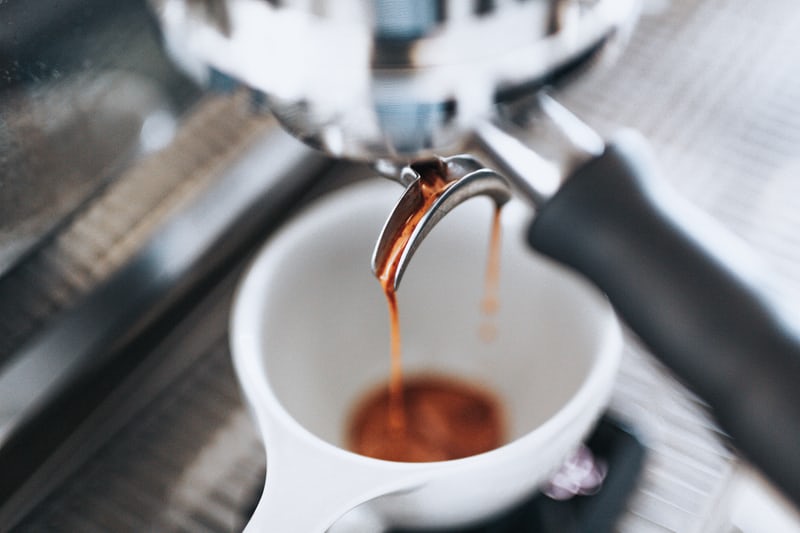
Vietnam supplies more than half of the world’s Robusta coffee and plays an increasingly important role in efforts to save coffee from the impacts of climate change (According to The Washington Post).
(Origin of Robusta coffee. Source: Thunderstock)
Origin of Robusta Coffee
In the 1800s, Coffea Canephora – commonly known as Robusta coffee – was first discovered in the Belgian Congo (West Africa). It is also native to tropical forests around Lake Victoria in Uganda.
Robusta coffee was introduced to Southeast Asia in the 1900s after Coffee Leaf Rust devastated the Arabica crop in Sri Lanka in 1869 (or 1867, according to Wikipedia), spreading to most coffee-growing countries. Notably, the Dutch brought Robusta coffee to Java, Indonesia, in 1901.
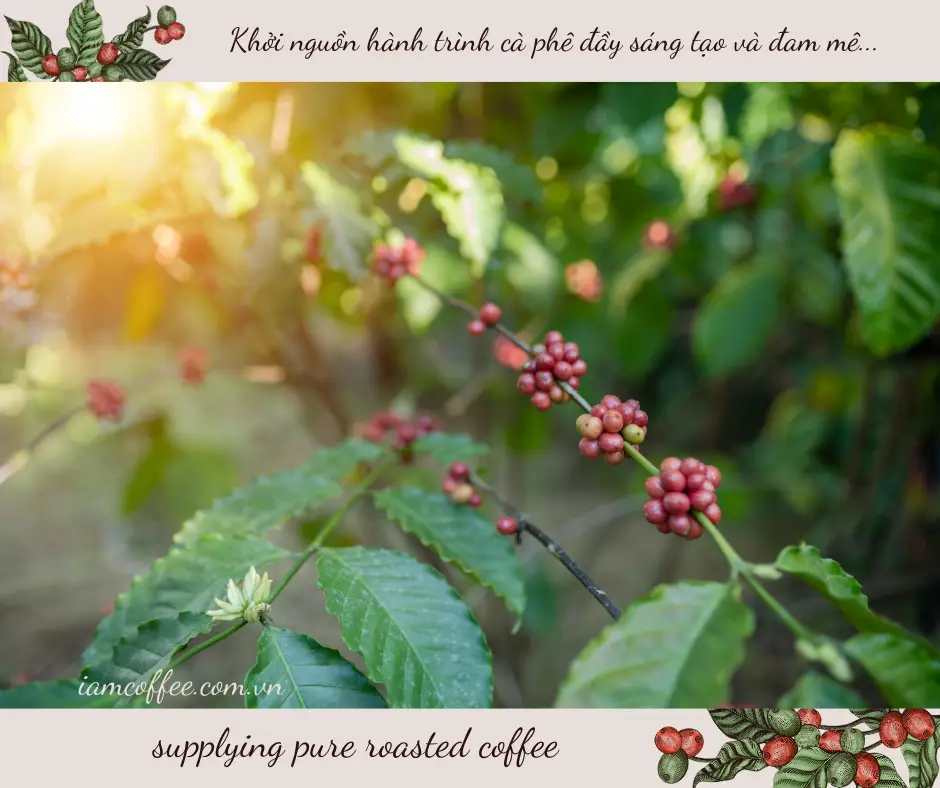
(Robusta coffee plant. Source: sutiporncanva)
Growth Characteristics of Robusta Coffee
The Robusta coffee plant, also known as Cà phê Vối in Vietnam, belongs to the species Coffea canephora. It is either a woody plant or shrub. The tree begins yielding harvestable beans at 3–4 years of age and can produce beans for approximately 20–30 years. Mature trees typically grow to heights of 4.5–6.5 meters but can reach up to 10 meters. Robusta plants require more sunlight compared to other species and thrive in tropical climates.
- Optimal altitude: Below 1,000 meters above sea level.
- Preferred temperature: Between 24–29°C.
- Rainfall requirements: At least 1,000 mm annually, with optimal productivity achieved at 2,200–3,000 mm of yearly rainfall.
Robusta coffee is notably resistant to diseases like coffee leaf rust, stem borers, and nematodes, and offers high productivity. This results in relatively low cultivation costs.
Characteristics of Robusta Coffee Beans
- Shape: The beans are rounder and smaller than Arabica beans, with a straight groove down the middle.
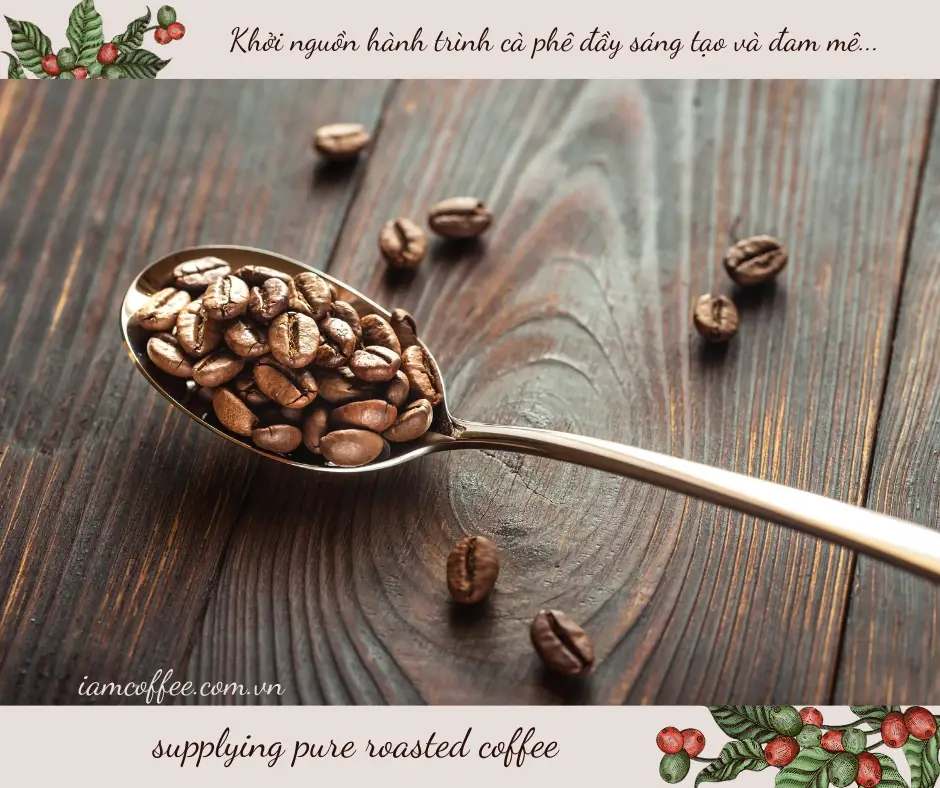
(Shape of Robusta Coffee Beans. Source: Oleksandrcanva)
+ The Caffeine Content in Robusta Coffee Beans
Robusta coffee beans have a remarkably high caffeine content, ranging from 2–4% (compared to Arabica’s 1–2%). This difference gives Robusta coffee its intense, bold flavor, enhancing its taste and delivering a robust bitterness. The caffeine not only provides a wake-up boost for coffee drinkers but also contributes to the unique, full-bodied flavor, making it a top choice for those who prefer strong coffee profiles.
+ The Flavor of Robusta Coffee
Robusta coffee is renowned for its strong, intense flavor. Pure roasted Robusta coffee boasts an aromatic profile with complex notes of barley, hazelnut, cocoa, and wood. These rich flavors result from chemical reactions during the roasting process, where amino acids and sugars in the beans transform into hundreds of aromatic compounds. These notes enrich Robusta coffee’s identity, creating a multi-layered and distinctive tasting experience.
Economic Value of Robusta Coffee
Brazil is the largest coffee exporter globally, but which country ranks second? The answer might surprise you: it’s Vietnam.
- Coffee production plays a crucial role in Brazil’s economic growth, driving the nation’s economy. According to the USDA, Brazil was projected to produce 58 million 60kg coffee bags during the 2019–2020 marketing year, accounting for over one-third of global production. Brazil leads the world in Arabica coffee production.
- Meanwhile, Vietnam leads the world in Robusta coffee production, contributing over 40% of the global output during the 2019–2020 season. Vietnam ranked as the second-largest coffee producer globally, with a production volume of 29 million bags in 2020. Vietnam also boasts the highest coffee yield worldwide, producing 2.4 tons per hectare—nearly double Brazil’s 1.4 tons per hectare and far exceeding other top-producing nations such as Honduras (0.9 tons/hectare), Colombia (0.9 tons/hectare), Ethiopia (0.7 tons/hectare), and Indonesia (0.5 tons/hectare).
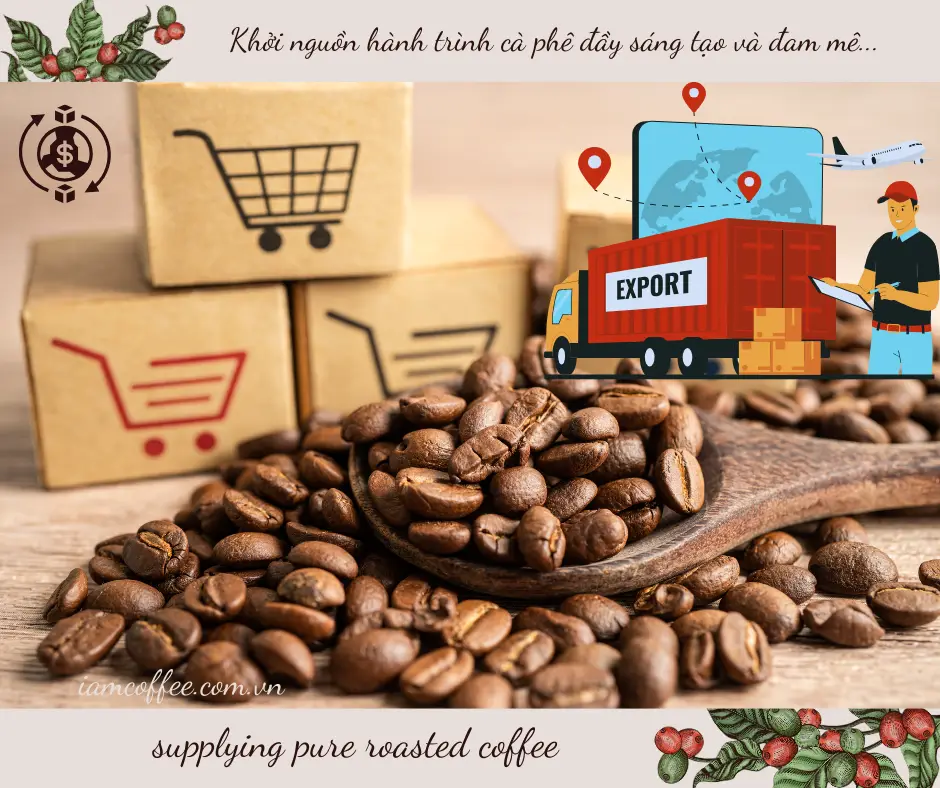
(The economic value of Robusta coffee. Source: Sasirin & CHAIWAT)
In the 19th century, Vietnam virtually did not produce coffee. However, recently, Vietnam has rapidly risen to become a leading producer of this commodity.
Thanks to the favor of nature, suitable soil, and the decision to boost economic growth by the Party and the State, investors saw the opportunity to export coffee to international markets, making Vietnam one of the largest producers of Robusta coffee in the world.