
Coffee is not merely a daily beverage; it is a symbol of human culture and history. Let’s embark on a journey through the fascinating story of coffee across different eras and regions.
I. Coffee in Ancient Times
Around 800 BCE:
- Discovery in Ethiopia: Coffee was discovered in the region we now know as Ethiopia. A fascinating legend tells the story of a goat herder named Kaldi in this area. One afternoon, he noticed something peculiar: his goats were unusually energetic, leaping around and staying awake all night.
- The Mysterious Red Berries: Curious about the cause, Kaldi followed his goats and found them eating red berries from an unfamiliar tree. Intrigued, he decided to taste the berries himself. He immediately felt exhilarated and full of energy, as if all his senses had been awakened.
- Sharing the Discovery: Kaldi shared his findings with local monks. Initially, they suspected the berries to be “demonic fruits” and decided to burn them. However, as the berries roasted, they released a captivating aroma that piqued their interest.
- The First Coffee Beverage: The monks began experimenting with the roasted seeds, eventually brewing a drink from them. They discovered that this drink helped them stay alert and focused during long prayer sessions, marking the origin of coffee as a stimulating beverage.

(Kaldi và đàn dê của anh ấy. Nguồn: Sưu tầm.)
The 15th Century
-
- From Ethiopia to Yemen: Coffee spread from Ethiopia to Yemen through traders and laborers.
- A New Home for Coffee: The coffee plant found an ideal environment to thrive in Yemen. The Yemeni people began cultivating coffee in the highlands and used the beans to prepare a beverage by boiling them in water.
- The Port of Mocha: Yemen’s port city of Mocha became a bustling center for coffee trade. The name “Mocha” gained fame as a term for a renowned variety of coffee.
II. Coffee in Islamic Culture
15th–16th Century
- Advancements in Coffee Preparation: As coffee gained popularity, Arab communities refined roasting and brewing methods. The Ibrik, a classic coffee pot originating in Turkey and the Arab world, was introduced and became a symbol of traditional coffee brewing artistry.
- The Origin of the Word “Coffee”: The term “coffee” is believed to derive from the Arabic word “Qahwa”, which means a drink made from the liquid of the coffee berry. The Turks later adopted the word as “Kahve”, which then spread widely across different regions.
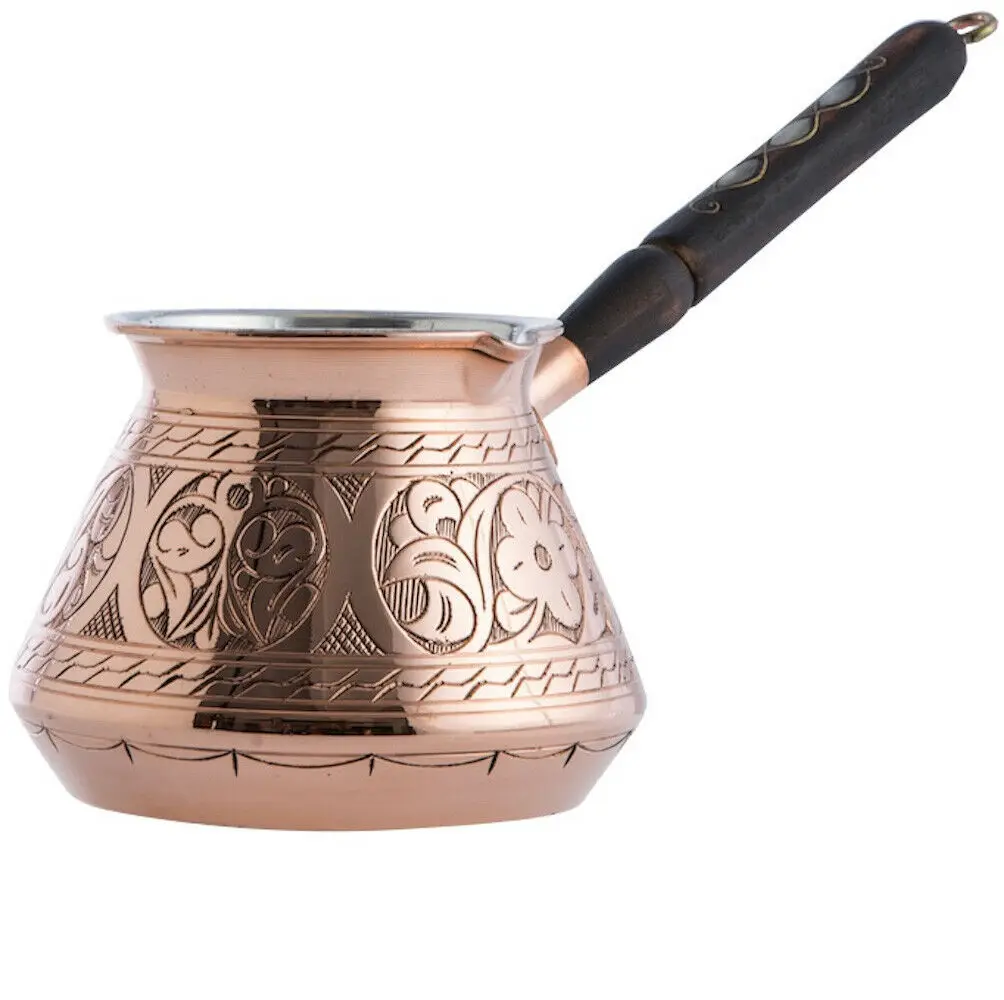
(Ibrik Pot. Source: Collected)
- The 16th Century Coffee Houses: Around the 16th century, the first coffee houses, known as “kaveh kanes” or “coffee houses,” appeared in cities like Mecca, Cairo, and other major cities.
- Coffee Spreads from Yemen: Coffee gradually spread from Yemen to other parts of the Middle East and North Africa.
- Coffee’s Aroma Reaches North Africa: From the Middle East, the fragrance of coffee spread to North Africa, particularly to Egypt, Morocco, and Tunisia.
- New and Enchanting Coffee Houses: Fascinating coffee houses began to emerge in Cairo, Casablanca, Fez, and other major cities.
- Coffee in Islamic Culture: Coffee became an integral part of Islamic culture, especially in gatherings and discussions held at coffee houses (qahveh khaneh).
- Coffee Houses as Meeting Places: Coffee houses served as meeting spots for intellectuals, artists, and merchants, where they would share ideas and discuss current affairs.
- Coffee in Religious Rituals: Coffee also played a role in religious ceremonies, helping clergy stay alert during long prayer sessions.

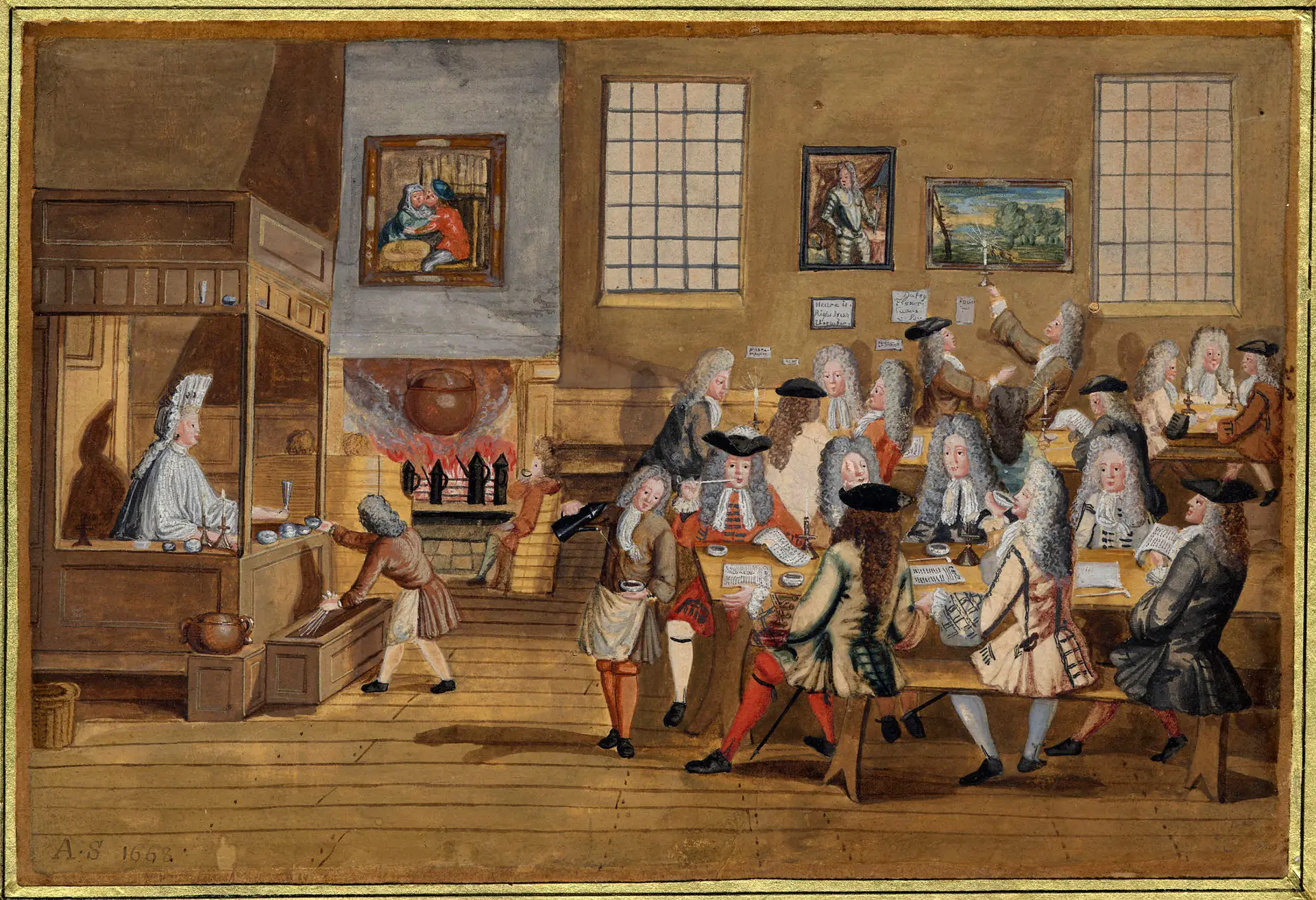
(Coffee quickly became popular among scientists, scholars, and merchants. Source: Collected)
18th Century
- Coffee Houses in Paris and London: Coffee houses emerged in Paris and London, becoming gathering spots for authors, artists, and intellectuals.
- Famous Parisian Coffee Houses: Iconic coffee houses such as Café de Flore and Les Deux Magots in Paris became popular meeting places for renowned writers and artists like Voltaire, Rousseau, and Sartre.
- Coffee as a Cultural Hub: These coffee houses were not only places to enjoy beverages but also spaces for cultural and intellectual exchange.
IV. Coffee in America
18th Century
- Introduction to America: Coffee was brought to America through European merchants.
- Coffee’s Rise in American Life: Coffee quickly became a staple in daily American life, especially after tea became scarce and expensive due to the American Revolution.
- Coffee Houses as Social and Political Hubs: Coffee houses in major cities like New York and Boston became centers for social and political activities.
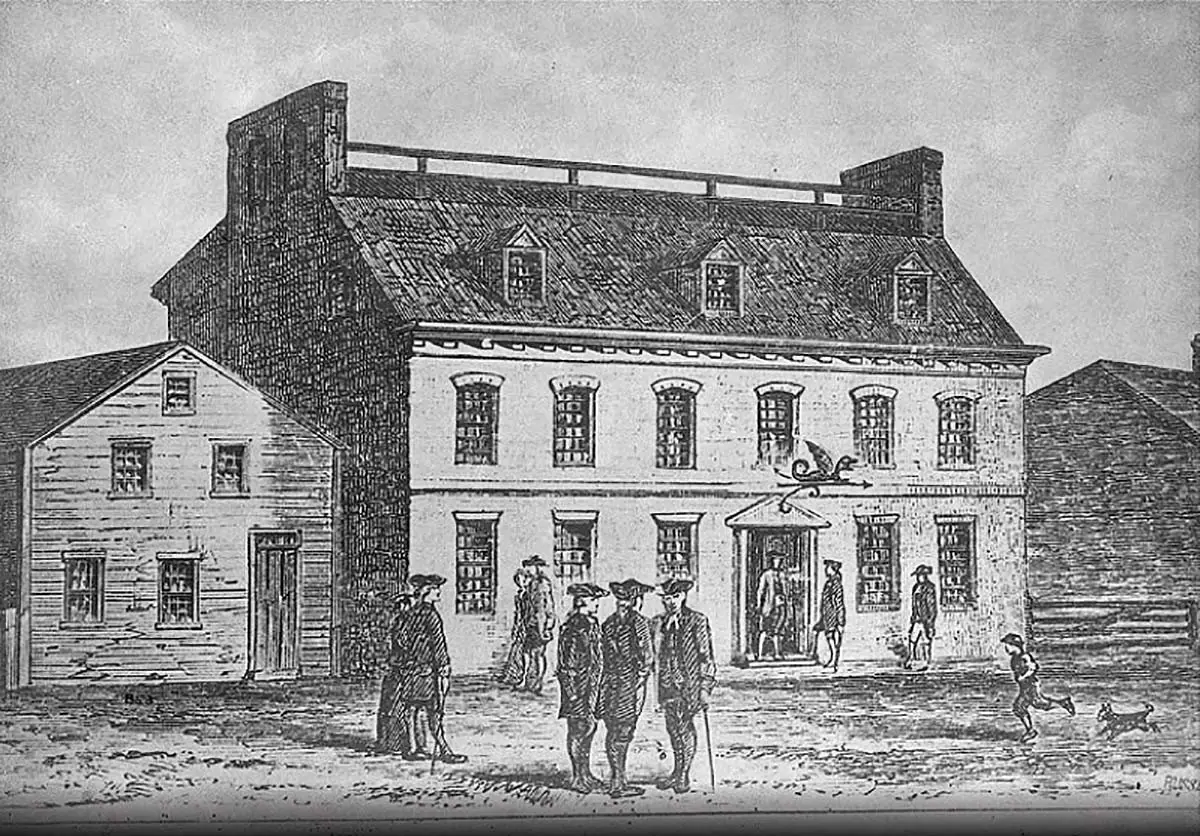
(Coffee quickly became a part of daily life for Americans. Source: Collected)
V. Modern Coffee
19th Century
- Coffee Becomes a Major Industry: Coffee grew into a large industry.
- Advancements in Roasting and Brewing: The invention of advanced coffee roasting and brewing methods spurred the development of the coffee industry.
- Birth of Iconic Brands: The 19th century saw the creation of famous coffee brands such as Lavazza in Italy (1895) and Maxwell House in the United States (1892).
20th Century
- The Rise of Starbucks: Iconic brands like Starbucks (founded in 1971) revolutionized the way coffee is enjoyed.
- A Social Experience: Starbucks not only sold coffee but also created a new social experience, offering comfortable spaces for meetings and work.
- Other Leading Brands: Brands like Illy also contributed to elevating the quality and style of coffee appreciation worldwide.
Today
- Coffee as a Cultural Experience: Coffee is not only a beverage but also a cultural and social experience.
- Diverse Coffee Offerings: Coffee now comes in a wide range of flavors, brewing styles, and origins, with movements like specialty coffee emphasizing quality and sustainable production practices.
- Coffee Houses as Cultural Hubs: Modern coffee shops have become cultural centers, hosting events such as music, art, and community activities.
VI. Coffee in Vietnam
Origins
- The first coffee plant was introduced to Vietnam in 1857 by Father Alexandre Vallet, a French priest.
- Initially, coffee was grown experimentally in northern provinces such as Hà Nam and Quảng Trị.
- However, due to unsuitable climatic conditions, coffee did not thrive well in these areas.
- In 1875, coffee was successfully introduced in Buôn Ma Thuột (now Buôn Ma Thuột city, Đắk Lắk province), where it flourished and became widely cultivated.
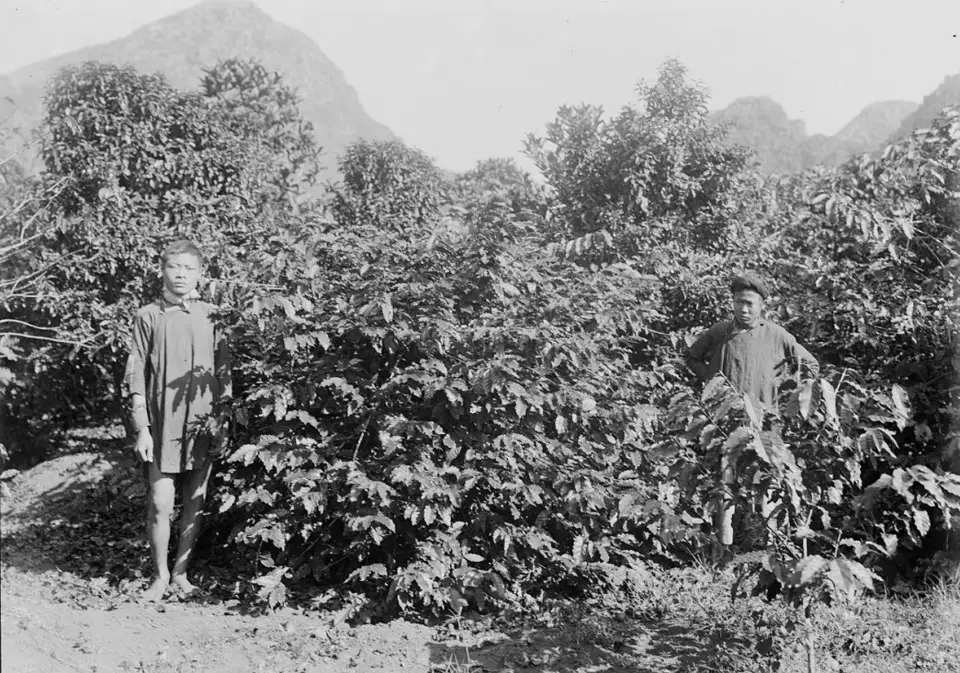
(Coffee Plant on the Cressonnière Estate – 1898. Source: Collected)
Climate and Soil:
- The Central Highlands (Tây Nguyên) region in Vietnam has a climate and soil that are highly suitable for the growth of Robusta coffee.
- Particularly, Robusta coffee was introduced to Vietnam from Indonesia in 1908 and quickly became the dominant coffee variety due to its excellent adaptation to the climate and soil conditions of the Central Highlands.
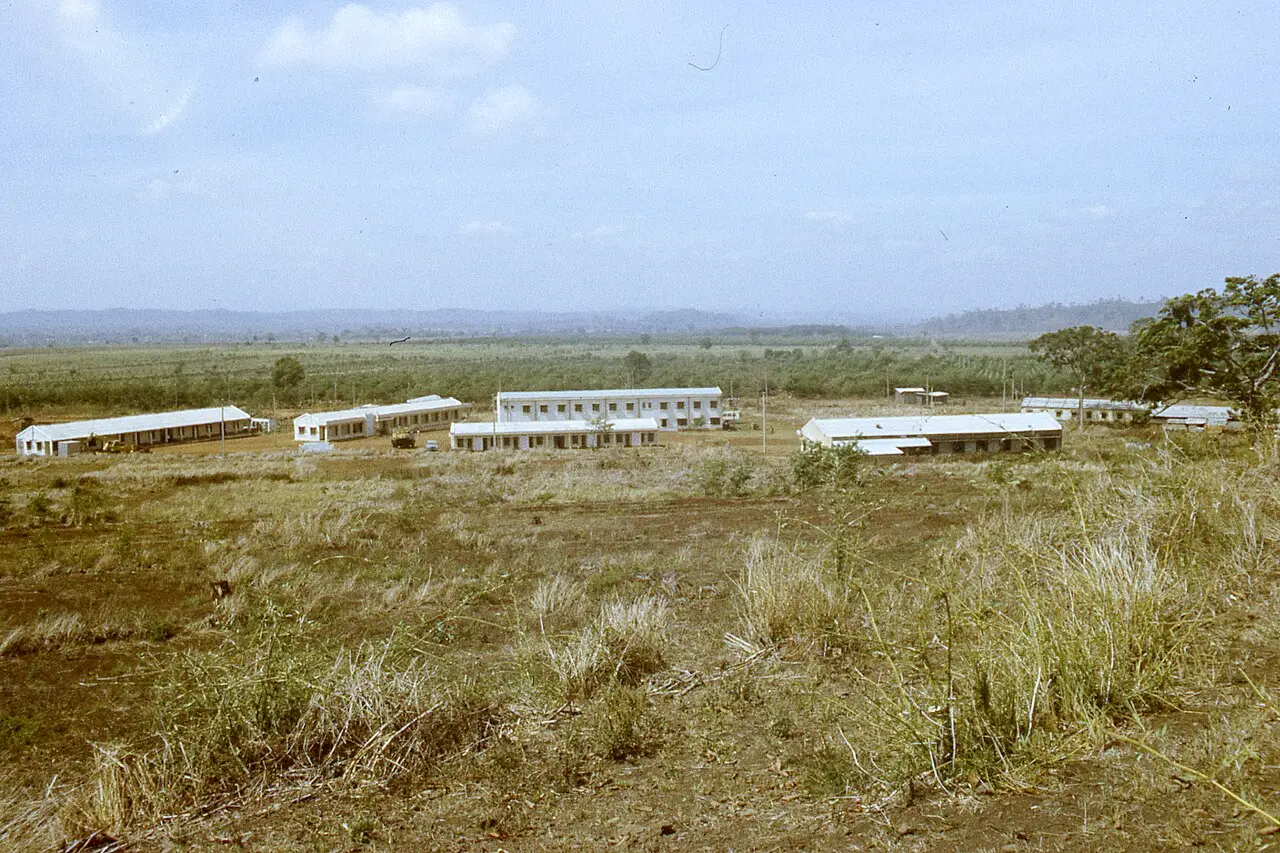
(Vietnam-Germany Coffee Joint Venture, photo taken in 1985. Source: Collected)
Development Journey:
- Early 20th Century: The French established several large coffee plantations in the Central Highlands (Tây Nguyên), with the Ea Tam coffee plantation (now Ea Tam Commune, Krông Năng District, Đắk Lắk Province) being a prime example, covering an area of up to 10,000 hectares.
- Robusta Coffee: Robusta coffee has contributed to the unique flavor profile of Vietnamese coffee.
- Post-Independence: After gaining independence, Vietnam continued to develop the coffee industry, focusing on both production and processing to enhance the value of its products.
Achievements of Coffee:
- Global Exporter: Today, Vietnam is the world’s second-largest exporter of Robusta coffee, with an annual export volume of over 4 million tons.
- Global Reach: Vietnamese coffee is exported to more than 180 countries and territories around the world.
- Key Economic Sector: The coffee processing and brewing industry in Vietnam is not only an essential part of the economy but also an integral part of urban culture.
- Creative Coffee Culture: Unique and innovative coffee shops are flourishing in major cities, showcasing the diversity and creativity in coffee-making.
- Signature Coffees: Vietnamese iced coffee (Cà phê sữa đá) and egg coffee (Cà phê trứng) are two distinctive types of Vietnamese coffee that attract international tourists.
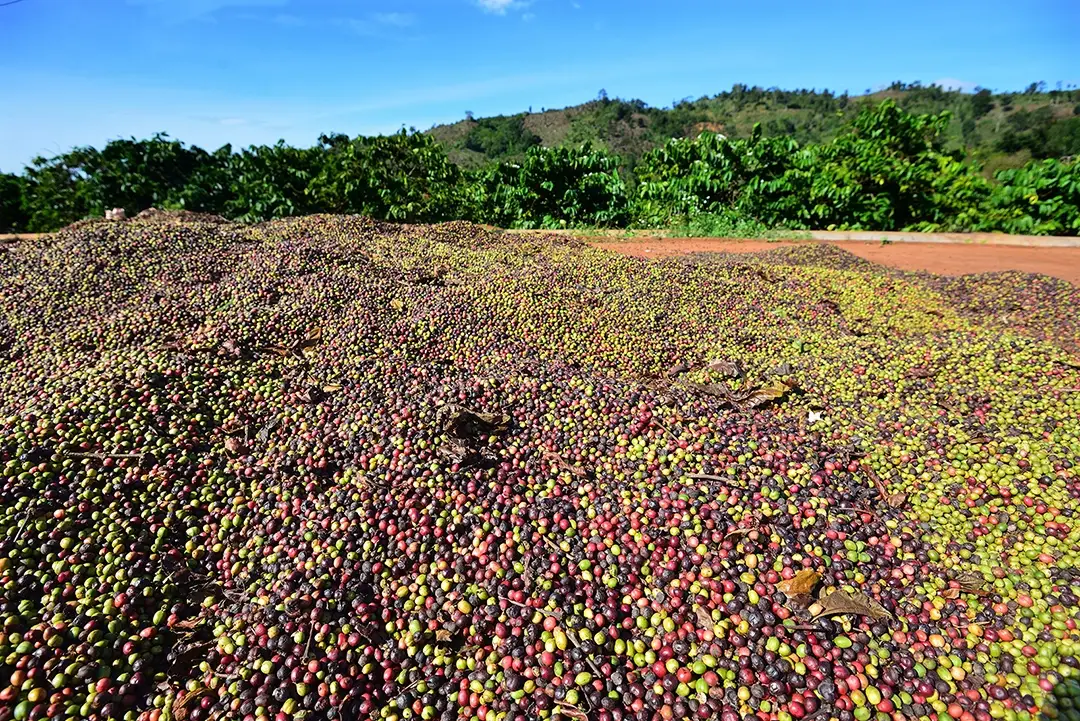
(Vietnam is the world’s second-largest exporter of Robusta coffee, with an annual export volume of over 4 million tons. Source: Collected)
The journey of the coffee bean has traversed many periods and lands. From its early days in Ethiopia to its spread across the globe as it is today, coffee is not just a beverage; it has become an integral part of our lives and culture.