- As a coffee farmer, I feel the need to answer this question.
- I will try to provide the clearest answer I can, without being arrogant.
- Coffee is very complex, considered the most complex food that humans consume (basically, there are about 1500 chemical compounds in the cup of coffee you’re drinking).
- What affects its essence and the creation of these components?
1. TERROIR:
-
- The soil (composition, pH level), water quality, rainfall and duration, temperature, altitude, latitude, shade/sunlight, etc. (Terroir is a French term, and I couldn’t find an equivalent in Vietnamese, so I kept it as is)
2. CULTIVATION CONDITIONS:
-
- Fertilization/nutrition regime (organic, biological, synthetic, etc.), irrigation, pesticides/herbicides/fungicides, etc.
3. Coffee Varieties:
-
- Just like wine (Pinot Noir, Cabernet, etc.), coffee also has many different varieties: Typica, Caturra, Bourbon, Gesha, and hundreds of other species.
- These varieties have distinct characteristics (flavors, aromas, body, acidity) that change depending on factors 1 and 2.
4. Harvesting:
-
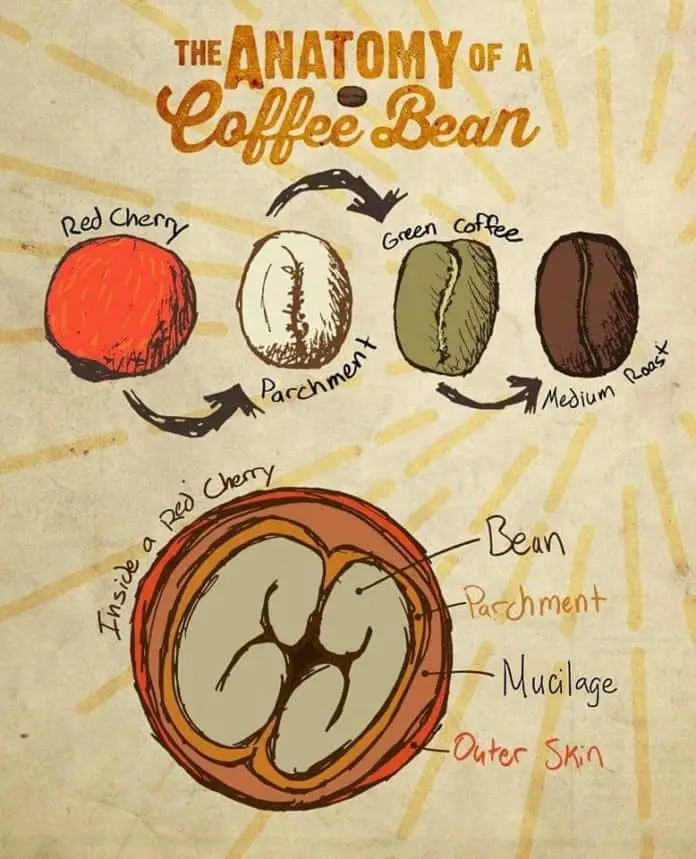
- Coffee is a type of fruit. Which one will be sweeter: an unripe green banana or a ripe yellow banana?
- The same applies to coffee—ripe coffee cherries have different colors.
- But ripe coffee cherries are sweeter, “cleaner,” and smoother when grown, harvested, processed, roasted, and brewed properly.
Let me know if you need any adjustments or more help!

5. Processing:
-
- This can be considered one of the most influential factors in flavor and aroma.
- There are three main methods used: Wet/Washed, Semi-wet/Honey, and Natural/Whole-dried.
- The wet/washed method will highlight the acidity and terroir. The coffee beans are “washed” by removing the skin and the pulp around them.
- This can be done in several ways: through fermentation, with or without water, or mechanically.
- The result is an experience reflecting the coffee variety’s reaction to the environmental conditions (as mentioned above).
- The semi-wet/Honey method is when the pulp of the coffee cherry is removed but a thin layer of mucilage is kept.
- It has the sweetness of pectin/sugar surrounding the coffee bean during drying.
- This increases sweetness, smooths out acidity, and gives a fuller body/mouthfeel (this is also my favorite processing method for most coffee varieties).
- The natural method: The coffee cherry is harvested and dried with the whole skin and pulp intact.
- This results in beans that have the flavor and aroma of fruits, usually similar to berries.
- This method often reduces or amplifies characteristics that would be detectable in the same variety processed wet; however, this is not always the case.
6. Drying:
-
- Too hot and too fast, and the coffee beans will have a woody and papery taste. Too slow and insufficient, and the beans will taste moldy.
7. Storage:
-
- If dried properly (slowly and evenly), green coffee beans (unroasted) can be stored for 10-14 months without significant deterioration, or only minimal loss in quality, under stable storage conditions.
- However, this is a subjective experience.
- The longer you store the beans, and depending on the storage conditions, the acidity will decrease, the body will become heavier, and the flavor will tend toward a woodier taste.
- It all depends on how you want to experience it.
- The storage period of coffee beans can yield impressive results in the cup you’re drinking.
8. Roasting:
-
- If roasted too dark, coffee will taste nearly the same, like charcoal.
- This is because the organic compounds that create the differences in coffee beans undergo carbonization.
- Again, this is a matter of personal perception.
- But the roasting process can determine a lot when it comes to whether you taste buttery toffee or peach flavors, even from the same batch of coffee beans.
- Everything could be perfect before this stage and then end up as a failure if the roasting process is not done carefully.
- Therefore, roasting coffee is both an art and a science: highlighting the desired characteristics while eliminating the undesirable ones (including flavor, body, sweetness, acidity, aftertaste, and the intensity of all these characteristics).
9. Brewing:
-
- This is easy to understand… well, not exactly. Here are the factors/variables that affect the quality and characteristics of the cup of coffee:
- Grind size: Particle size and consistency
- Water used for brewing: Temperature, hardness/softness, pH level
- Brewing time: The amount of time the coffee grounds are in contact with water
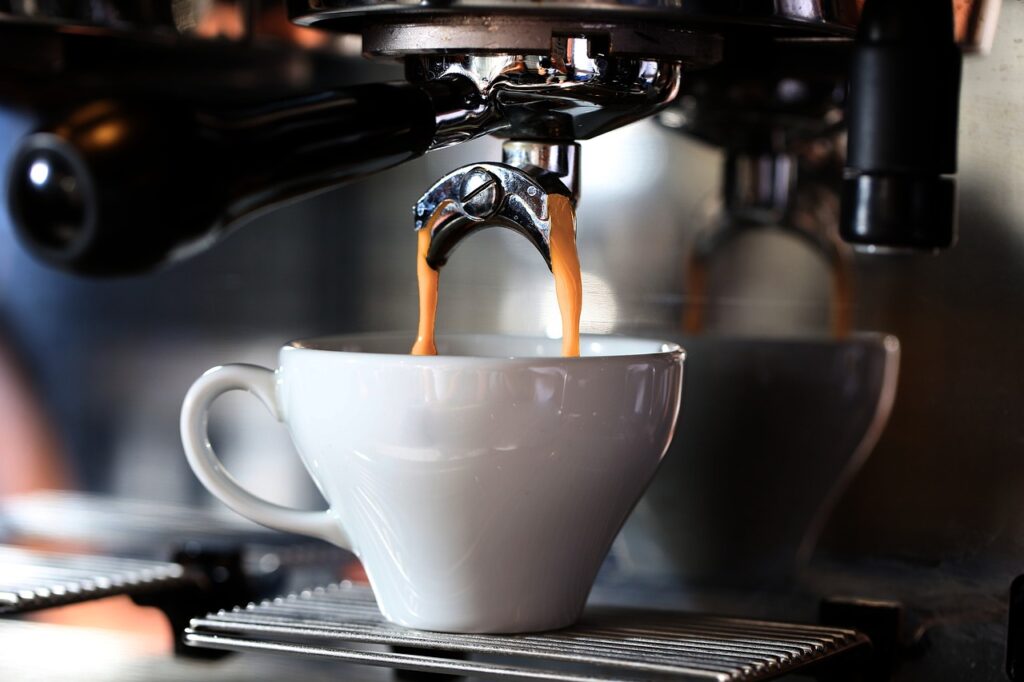
- Pressure: Espresso, Aeropress, moka pot, siphon
- Type of contact: Drip, full-immersion (e.g., French-press)
- Filtration: Whether or not the coffee is filtered (not water filtration, but coffee filtration)
- This is the struggle and beauty that coffee brings: You can mess up at any step from the coffee bean to the cup you hold.
- It’s precisely because of the complexity and delicacy of coffee that you are always chasing that elusive but harmonious balance.
- A “perfect” cup of coffee is an experience of the rare and harmonious interplay of countless variables, transcending space and time.
- There are so many hidden or unclear variables that explain why a cup of coffee at one location can taste different from the same type of coffee brewed in a café nearby.
- This is easy to understand… well, not exactly. Here are the factors/variables that affect the quality and characteristics of the cup of coffee: